
Thursday 9/17 Empire Magazine released their exclusive first look at Greta Gerwig’s Magician’s Nephew film, confirming early rumors that Meryl Streep will indeed voice Aslan, the Great Lion of Narnia. Moreover, Gerwig’s "rock'n'roll" Aslan has “heterochromatic eyes” inspired by David Bowie, feathered eyes, dragon-like skin, a lipstick red nose, and rainbow whiskers. Everything about Gerwig's visualization of Aslan speaks to breaking the gender binary and the celebration of transgressive identities. Though the move to queer Aslan is hardly surprising given Gerwig's politics and history of feminist filmmaking, the idea of a queerily feminine Aslan is important to address. By casting a woman as the voice of Aslan, Gerwig twists an icon of Christ into a different form.
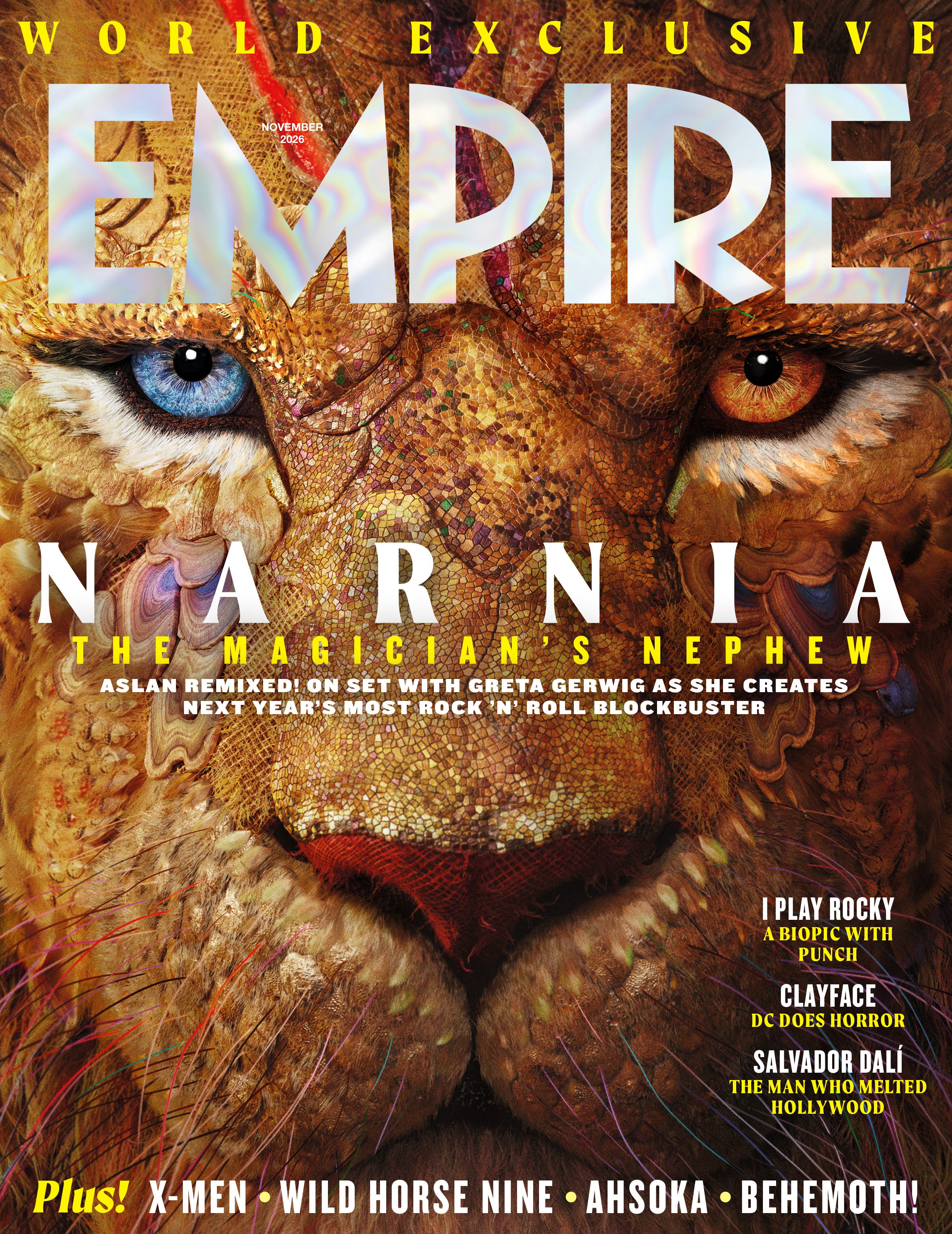
Image from https://www.empireonline.com/movies/news/narnia-magicians-nephew-aslan-meryl-streep-cover-exclusive/
We love our favorite stories because they provide a frame through which we can understand who we are and the world we live in. We love C.S. Lewis and his Chronicles of Narnia for the cosmic vision they give us—a re-enchanted way to imagine the world as filled with divine presence, crammed with meaning, and bursting with goodness, truth, and beauty.
Lewis could write such a world because his imagination was deeply sacramental. He understood that created things like wardrobes, lamp posts, and lions are formed with intrinsic meaning.
Even to change the lamp post for a stop sign would alter the magic and meaning of Narnia, at least a little bit. As Lewis scholar Michael Ward explains in an essay titled “Onions and Roses,”
The world is charged with meanings that are given by the nature of the things themselves. Onions and roses have essential or substantive qualities that inhere in the very objects that they are. We can’t make onions and roses mean whatever we like. Roses have certain meanings that are simply given, – meanings that are not given by onions. The scent, the fragility, the mystery of a rose as it slowly discloses its heart, – these are its data. These inescapable, ineradicable real-life qualities of a rose must be recognized and respected.”
If Gerwig traded the apple of The Magician’s Nephew for a pomegranate, this would shift the meaning of the story somewhat but it wouldn’t necessarily violate the essential theme. However, to send Digory off digging for an onion in a cave rather than flying up to a tree on a hilltop garden would destroy all the story’s essential allusions to the Garden of Eden and completely change the meaning of the young boy’s quest.
Any filmmaker will necessarily adapt various aspects of a novel and change certain details; the transposition from the written word to the visually dominant, time-bound media of film makes this inevitable. However, these changes can be done in a way that honors the essential meaning of the story.
Even significant alterations like a change in character gender, can be done in a way that still serves the heart of a story. We could imagine making Lucy into Lucas or Susan into Samson; such changes would alter minor dynamics in the stories, but it wouldn’t endanger the thematic vision of the world.
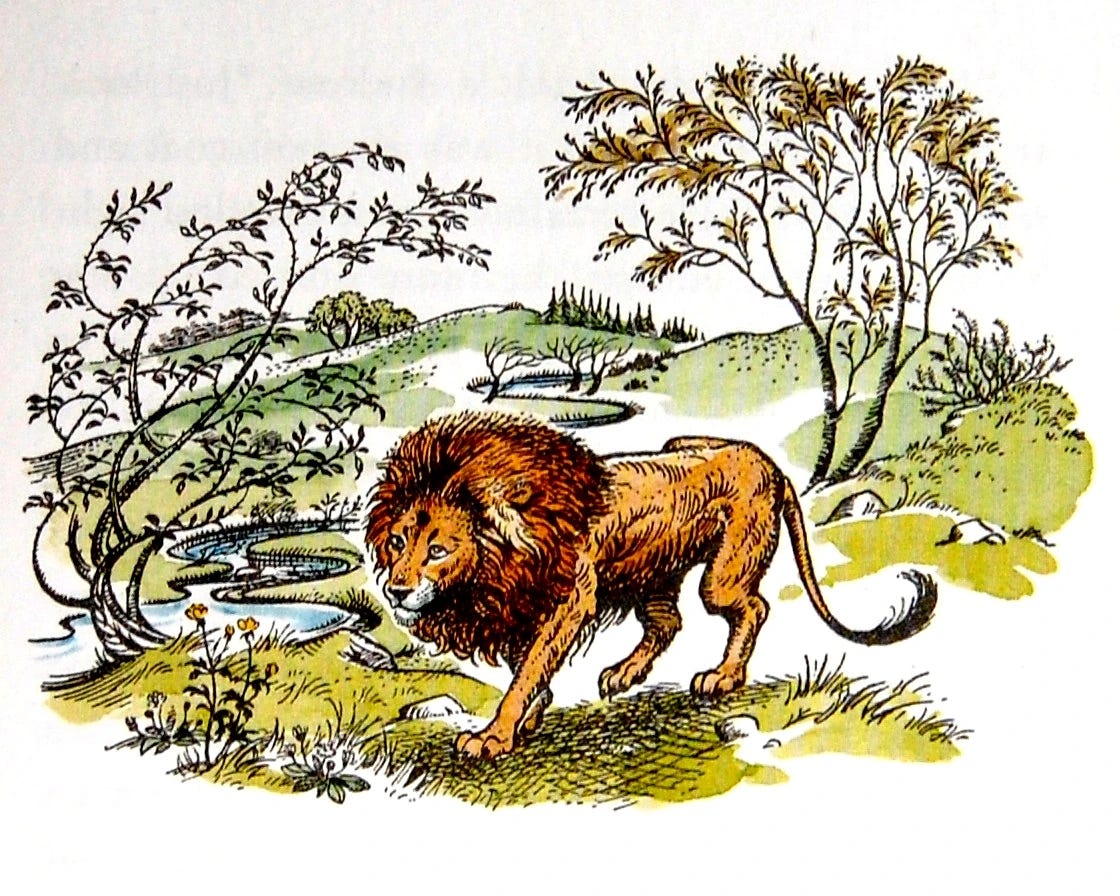
But to change the gender of The Lion, of The King, of the Incarnate Son of the Emperor Across the Sea who symbolically represents the deity of Christ within Lewis’s imaginary world is to completely alter the structure and meaning of Lewis’s sacramental cosmos.
For Lewis, Gender is “a more fundamental reality than sex. Sex is, in fact, merely the adaptation to organic life of a fundamental polarity which divides all created beings.”1 The fruitful duality of male and female are symbolic manifestations of the spiritual duality between heaven and earth, creator and creation, Christ and his church. To invert this creative duality, to feminize the creator and masculinize the creation is to turn the world upside down, exchange sky for earth, height for depth, light for dark.
Lewis wrote explicitly about his opposition to the feminization of God in his essay, “Priestesses in the Church?”:
Suppose he says that we might just as well pray to ‘Our Mother which art in heaven’ as to ‘Our Father’. Suppose he suggests that the Incarnation might just as well have taken a female as a male form, and the Second Person of the Trinity be as well called the Daughter as the Son. Suppose, finally, that the mystical marriage were reversed, that the Church were the Bridegroom and Christ the Bride.… it is surely the case that if all these supposals were ever carried into effect we should be embarked on a different religion. Goddesses have, of course, been worshipped: many religions have had priestesses. But they are religions quite different in character from Christianity.2
A world ruled by Aslana is a world quite different in character from Narnia. A story in which the children bow before the Lioness is a story quite different in character than the Chronicles of Narnia.
Kingliness is one of the major realities that Lewis wanted to communicate through his stories. The very first story of Narnia, as Michael Ward has shown in Planet Narnia, is centered around the ethos of Joviality, the bright and happy rule of a great and good king.
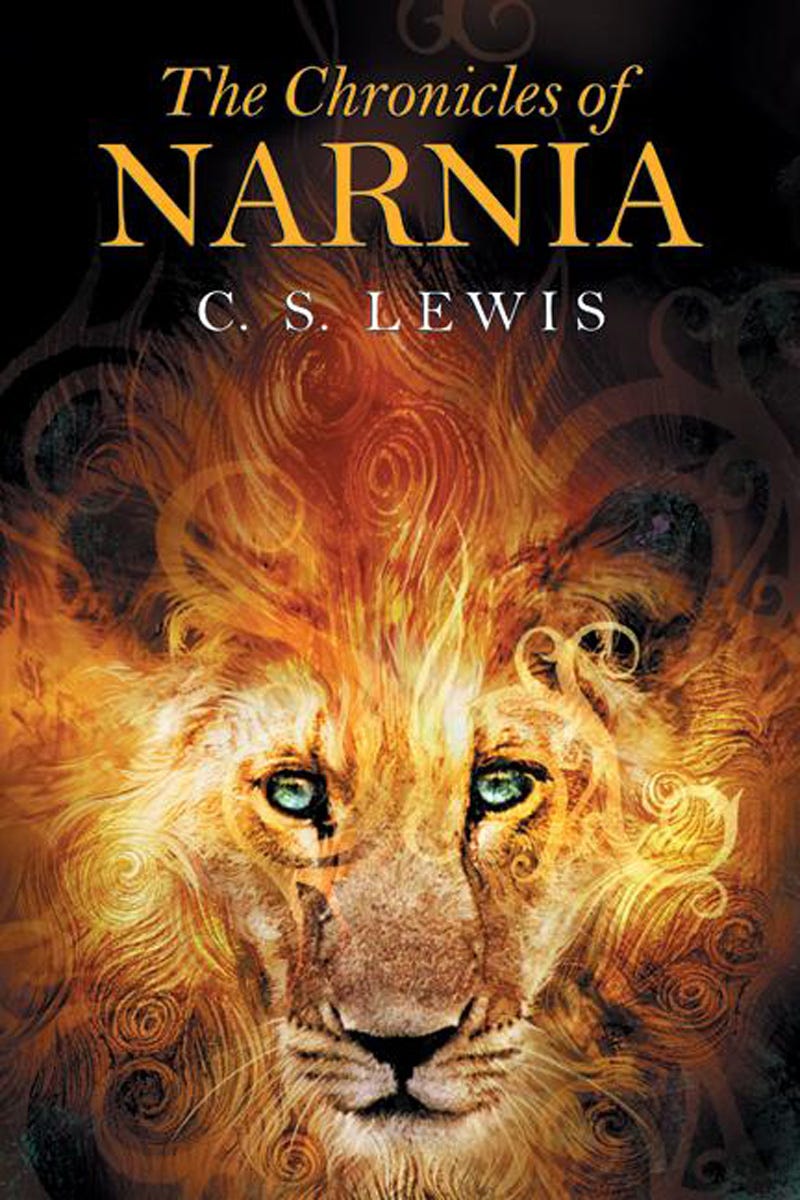
Perhaps more than anything else, Lewis wanted to help the world taste and see what it meant to love and worship The King again, for he believed that “the man who cannot conceive a joyful and loyal obedience on the one hand, nor an unembarrassed and noble acceptance of that obedience on the other, the man who has never even wanted to kneel or to bow, is a prosaic barbarian.”3 The man who cannot imagine delight in kneeling before a king is the man who cannot imagine worship.
The glory of Kingliness is also a major theme of Lewis’s Cosmic Trilogy. In That Hideous Strength, the redemption of Lewis’s main character, Jane Studdock, is dependent upon the moment she can taste the freedom and happiness of serving a King: “For the first time in all those years she tasted the word king itself with all linked associations of battle, marriage, priesthood, mercy and power… Her world was undone… Jane was simply in the state of joy. The other three had no power upon her, for she was in the sphere of Jove, amid light and music and festal pomp, brimmed with life and radiant in health, jocund and clothed in shining garments.”4
Queenliness has its own great glories, as Lewis explores in the Edenic world of Perelandra, but it is not the same glory as kingliness, nor can it possess even its own light and beauty in a world absent the king, any more than the moon can shine a world absent the sun.
But creating a world absent the sun is exactly what Greta Gerwig seems to have planned. The new Narnia movie looks to be a story told by Tash and his monkey Shift, a story King Tirian fears to hear: “Would it not be better to be dead than to have this horrible fear that Aslan has come and is not like the Aslan we have believed in and longed for? It is as if the sun rose one day and were a black sun.”5
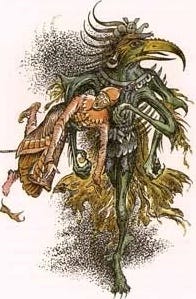
Indeed. And it would be better to have no Narnia films than one that comes with this horrible queering of the King.
Annie Crawford is a cultural apologist, a teacher, and the Director of the C.S. Lewis Studies certificate at the Logres Institute. if you are appalled at Gerwig’s Aslana, and want to read Lewis rightly, join Annie for a class! Registration for the fall term closes September 30.
The original form of this article was published at Salvo magazine as “Aslan Unmade.”
C.S. Lewis, Perelandra (HarperCollins, 2001), p. 172.
Lewis, C. S.. The C. S. Lewis Collection: Essays and Speeches: The Six Titles Include: The Weight of Glory; God in the Dock; Christian Reflections; On Stories; Present Concerns; and The World’s Last Night (p. 430). (Function). Kindle Edition.
Lewis, C. S.. The C. S. Lewis Collection: Essays and Speeches. “Democratic Education” in Present Concerns (p. 1001). (Function). Kindle Edition.
Lewis, C. S.. The Space Trilogy, Omnib: Three Science Fiction Classics in One Volume: Out of the Silent Planet, Perelandra, That Hideous Strength (p. 638). (Function). Kindle Edition.
Lewis, C.S.. The Last Battle (Chronicles of Narnia Book 7) (p. 18). (Function). Kindle Edition.
I wish modern degenerates could not acquire the rights to the great works of the past. Truly a dark age of “art” where the only production is an appropriation of earlier works for the purpose of destroying them in the most grotesque ways. And yes, In a way Lewis predicted this, actually. In The Last Battle, where the evil one wears a skinsuit of the Lion to manipulate everyone for his own gain. The only way the forest animals of Narnia would trust the Evil one is if they still saw Aslan. It is so much like parents still taking their kids to see this subversive slop because it’s Narnia, the stories they grew up with. But it’s really just a postmodern narcissists stealing the story to twist it for their own ends, to change it, to turn it in its head and manipulate their audience. They can’t create their own stories, only destroy the past, repeatedly.
I read this and thought, my friend Annie Crawford would like this; I should forward it to her. …And then I got to the bio. 😉